Embarking on a job search as an embedded software engineer can be an exciting yet daunting journey. Your resume is often the first impression you make on a potential employer, acting as your professional advocate before you even step into an interview. It’s not just a list of your past jobs; it’s a strategically crafted document designed to showcase your unique skills, experiences, and potential to solve complex engineering challenges.
Finding the perfect embedded software engineer resume template can significantly streamline this process, providing a robust framework that highlights your technical expertise in firmware, hardware interaction, real-time operating systems, and more. A well-structured template ensures that critical information is presented clearly and concisely, helping hiring managers quickly identify why you are the ideal candidate for their specialized roles.
Building a Strong Foundation: Key Components of Your Embedded Software Engineer Resume
Creating a compelling resume starts with understanding the essential sections that recruiters expect to see. Beyond just listing your previous roles, an effective embedded software engineer resume template helps you strategically position your expertise. This foundation includes your contact information, a professional summary, a detailed skills section, a comprehensive work experience history, and an education segment. Each part plays a crucial role in painting a complete picture of your capabilities and aspirations.
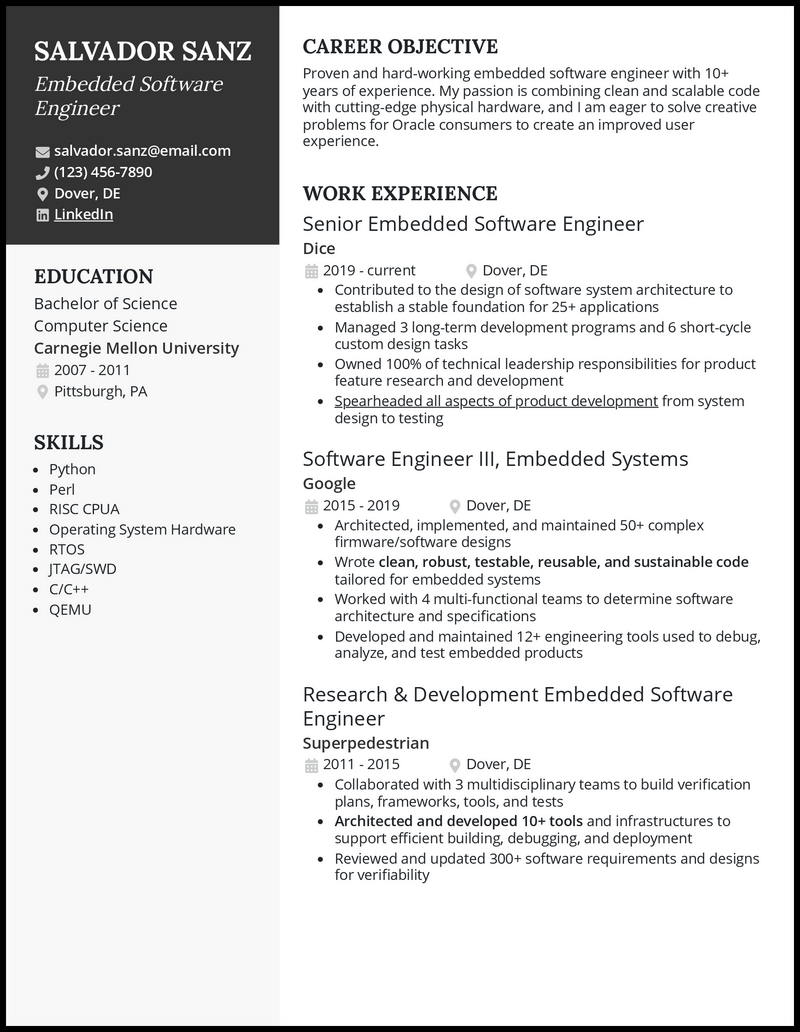
The professional summary, often just a few lines at the top, is your elevator pitch. For an embedded software engineer, this means concisely stating your years of experience, key areas of specialization (e.g., IoT, automotive, medical devices), and what value you bring to a team. It’s your opportunity to grab the recruiter’s attention and compel them to read further. Following this, the skills section becomes paramount, as embedded roles are highly technical and often require specific proficiencies.
Essential Skills to Highlight
- Programming Languages: C, C++, Python, Assembly
- Microcontrollers/Microprocessors: ARM Cortex-M, PIC, AVR, DSPs
- Operating Systems: RTOS (FreeRTOS, VxWorks, QNX), Linux (Embedded Linux), Bare-metal
- Protocols: I2C, SPI, UART, CAN, USB, Ethernet, Bluetooth, Wi-Fi
- Tools: Debuggers (JTAG, SWD), Oscilloscopes, Logic Analyzers, Version Control (Git, SVN), IDEs (Keil, IAR, Eclipse)
- Hardware Debugging & Testing
- Firmware Development & Device Drivers
- System Design & Architecture
- Problem-Solving & Analytical Thinking
- Teamwork & Communication
Your work experience section should go beyond just listing job titles and dates. For each role, focus on quantifiable achievements and responsibilities that directly relate to embedded systems. Use action verbs and provide context for your projects. Did you optimize firmware performance by 20%? Did you lead the development of a new device driver that reduced bug reports by half? These details make your experience tangible and impactful. Remember, an embedded software engineer resume template helps guide you in formatting these critical details so they are easily digestible.
Optimizing Your Embedded Software Engineer Resume Template for Maximum Impact
Once you have the core sections in place, the next step is to optimize your embedded software engineer resume template to stand out in a competitive job market. This involves tailoring your resume for each specific job application, understanding Applicant Tracking Systems (ATS), and refining your content for clarity and impact. Generic resumes rarely make the cut in specialized fields like embedded software.
One of the most crucial steps in optimization is customizing your resume for every job you apply for. Carefully read the job description and identify keywords, required skills, and responsibilities. Then, incorporate these terms naturally into your professional summary, skills section, and work experience bullet points. This not only shows the hiring manager you’ve done your homework but also helps your resume pass through ATS filters, which many companies use to screen applications before human eyes even see them.
Quantifying your achievements is another powerful way to optimize your resume. Instead of saying “developed firmware,” say “developed robust firmware for automotive control systems, reducing system latency by 15%.” Numbers and concrete results speak volumes about your contribution and impact in previous roles. Similarly, using strong action verbs at the beginning of your bullet points makes your accomplishments more dynamic and engaging.
When you’ve finished drafting, take the time to proofread meticulously. Typos and grammatical errors can detract from your professionalism, regardless of your technical prowess. It’s often helpful to have a fresh pair of eyes review your resume, perhaps a friend or mentor in the embedded software field, to catch any overlooked mistakes or suggest improvements. Ensure all dates are accurate and your contact information is up to date.
Finally, remember that your resume is a living document. As you gain new skills, complete new projects, and take on new responsibilities, continuously update your embedded software engineer resume template. Staying current ensures that your resume always reflects your most relevant and impressive qualifications, positioning you for your next big career opportunity.